How Much Does a Website Cost in India in 2026?
Back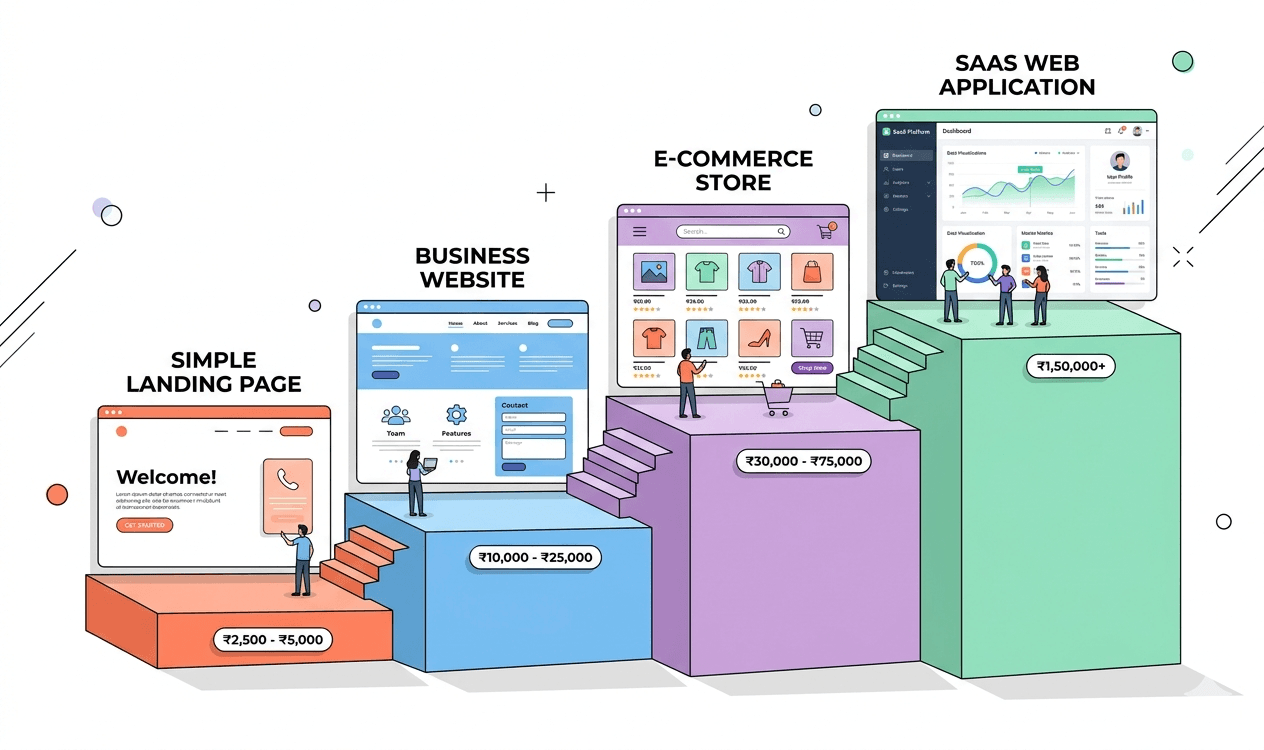
Website development cost in India in 2026 can range from ₹5,000 for a basic setup to ₹10,00,000 or more for advanced custom platforms. This guide explains what affects website pricing, what businesses should expect at different stages, and how to budget smartly before hiring a freelancer, agency, or in-house team.
One of the most common questions startup founders and business owners ask is simple: how much does a website cost in India in 2026? The honest answer is that pricing depends on what you want to build, how custom it needs to be, and who you hire to build it. Still, if you understand the key cost factors, you can plan your budget much more confidently.
In most cases, website development cost in India in 2026 starts around ₹5,000 for a very basic template-based website and can go beyond ₹10,00,000 for advanced custom platforms. Most small business websites usually fall in the range of ₹25,000 to ₹1,50,000, depending on design quality, features, and SEO readiness.
Quick takeaway: A cheaper website is not always a smarter investment. If your website is meant to generate leads, support sales, or build trust, quality matters more than the lowest quote.
What Usually Decides Website Cost?
The biggest cost factor is the type of website you need. A simple landing page for a freelancer or local service business is naturally much cheaper than an e-commerce site, a SaaS dashboard, or a custom client portal. Before asking for pricing, define the purpose of the website clearly.
Design quality also affects the budget. A template-based website is faster and cheaper to build, while a custom UI and UX approach costs more because it involves planning layouts, creating better user journeys, and improving the overall brand experience. For many businesses, this extra investment improves conversions.
Features and integrations can quickly increase the total cost. Payment gateways, CRM tools, chatbot systems, customer dashboards, booking flows, login systems, analytics, and third-party APIs all add development time. The smart approach is to prioritise launch-critical features first and keep optional features for phase two.
The technology stack matters as well. WordPress remains the more budget-friendly option for many business websites, while custom stacks like Next.js or React generally cost more because they offer stronger performance, better flexibility, and long-term scalability. If your site needs speed, SEO performance, and custom workflows, a modern stack often makes more sense.
SEO readiness is another factor many businesses underestimate. If you want your website to rank on Google, the site must be built with proper structure, page speed, mobile usability, metadata support, and content flexibility. SEO-focused development may increase the upfront cost, but it usually saves money later by avoiding rebuilds.
Typical Website Budget Ranges in India
A very basic template or DIY-style starter website can cost around ₹5,000 to ₹20,000. This type of site is usually suitable for freelancers, personal portfolios, or very small businesses that only need a simple online presence.
A standard WordPress business website usually falls between ₹25,000 and ₹80,000. This range works well for local businesses and small service companies that need service pages, contact forms, and a manageable content setup.
A custom business website generally costs around ₹75,000 to ₹2,00,000. This is often the right choice for startups and growing businesses that need better branding, stronger performance, tailored layouts, and room for future scaling.
An e-commerce website commonly starts at ₹80,000 and can go up to ₹3,50,000 or more depending on catalog size, payment setup, custom features, shipping logic, and admin requirements.
If you are building a SaaS product, platform, or custom web application, the budget often starts at around ₹3,00,000 and can exceed ₹10,00,000. Enterprise portals and ERP-like systems can go even higher because they usually involve complex workflows, user permissions, integrations, and long-term maintenance.
What Factors Affect Website Development Cost?
No two websites are the same. Here are the six key variables that determine how much your website will actually cost:
Type of Website
A simple brochure site costs a fraction of what an e-commerce platform or SaaS web app costs. Define your use case first.
Design Complexity
Template-based designs are cheaper. Custom UI/UX designs with unique interactions cost significantly more — but convert better.
Features & Integrations
Payment gateways, CRMs, chatbots, login systems, and APIs each add to the budget. Prioritise only what you need at launch.
Who Builds It
Freelancers are cheapest but riskiest. Agencies cost more but offer accountability, quality, and post-launch support.
Tech Stack
WordPress is budget-friendly. Next.js, React, or custom frameworks cost more — but are faster, more scalable, and SEO-ready.
SEO & Performance
If you want to rank on Google, you need SEO-optimised development. This adds cost upfront but pays dividends long-term.
Freelancer vs Agency vs In-House: A Cost Comparison
How you hire matters just as much as what you build. Here's a realistic comparison for Indian market 2026:
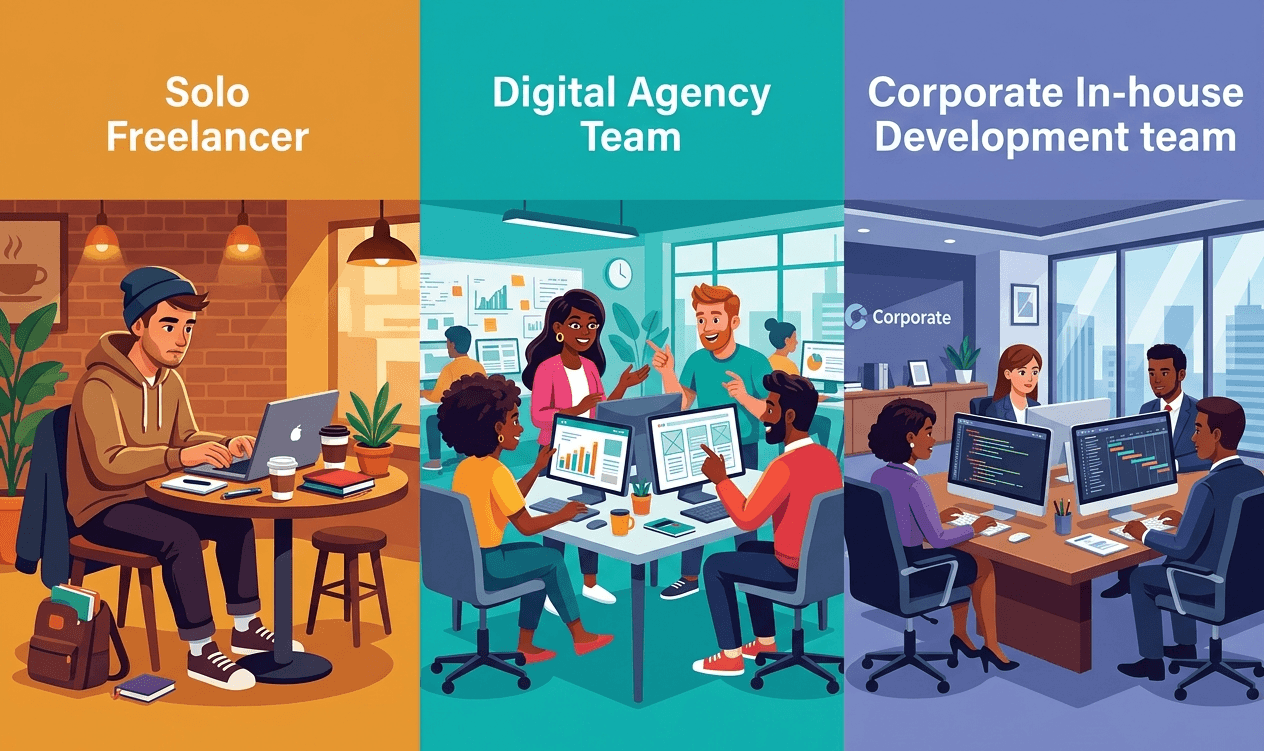
Who you hire changes both the cost and the outcome. A freelancer is often the cheapest option and may work well for very small projects, but quality, communication, and post-launch reliability can vary a lot from person to person.
A digital agency usually costs more upfront, but you also get a structured process, design and development expertise, project accountability, and long-term support. For startups and SMBs, this is often the most practical middle ground between affordability and reliability.
An in-house team gives you the highest level of control, but it is usually the most expensive route because hiring, salaries, management overhead, and long-term commitment all add up quickly. This model makes more sense when product development is continuous and central to the business.
Practical advice: If you are a startup or growing business, partnering with a capable digital agency often gives you better value than hiring the cheapest freelancer or building an in-house team too early.
Extra Costs Businesses Should Not Ignore
Many businesses get surprised by costs that weren't in the initial quote. Here's what to ask about upfront:
- •Domain registration — ₹700 to ₹2,000/year depending on extension (.com, .in, .io)
- •Web hosting — ₹3,000 to ₹30,000/year; shared hosting is cheap, cloud hosting (AWS/GCP) is pricier but faster
- •SSL certificate — Often free with good hosting, but some charge ₹2,000–₹8,000/year
- •Content writing — Professional copywriting for your pages: ₹5,000–₹25,000 extra
- •Annual maintenance — Bug fixes, updates, security patches: ₹5,000–₹30,000/year
- •Third-party plugins / APIs — Payment gateways, CRM tools, chat widgets can add ₹2,000–₹15,000/month
What Should a Good Website Include in 2026?
Regardless of budget, a business website in 2026 should have these basics to actually generate leads and rank on Google:
- •Mobile-first responsive design — over 70% of Indian users browse on phones
- •Fast loading speed — target under 3 seconds; affects both UX and Google rankings
- •On-page SEO — title tags, meta descriptions, structured headings, image alt text
- •SSL (HTTPS) — mandatory for trust and Google ranking
- •Clear CTAs — contact forms, WhatsApp button, phone number visible above the fold
- •Google Analytics & Search Console — so you can actually track what's working
How Much Should your Business Spend on a Website?
Here's a practical recommendation framework based on business stage:

If you are just validating an idea, a budget of around ₹20,000 to ₹50,000 is often enough for a clean landing page or a simple business site with basic SEO foundations.
An early-stage startup usually needs something stronger, often in the range of ₹75,000 to ₹1,50,000. This budget can support custom design, service pages, blog setup, enquiry forms, and a more polished brand presence.
An established SMB may need a more premium website with better performance, integrations, SEO improvements, and a stronger content structure. In such cases, budgeting around ₹1,50,000 to ₹4,00,000 is more realistic.
For products, platforms, or custom web applications, the budget usually starts from ₹4,00,000 and can go much higher depending on complexity, user roles, payment systems, API connections, and product roadmap goals.
PRO TIP
Don't underspend on your website if it's your primary lead generation tool. A ₹15,000 template site that converts no one is more expensive than a ₹1,50,000 site that brings you 10 leads a month.
Final Thoughts
Website development cost in India in 2026 varies widely, but the right investment depends on business goals, not just the cheapest number in a quotation. A low-cost website that fails to generate trust or leads can become more expensive than a better-built site that supports growth from day one.
Before hiring anyone, compare at least two or three options, ask what is included in the quote, and make sure the scope covers design, development, hosting guidance, SEO structure, and support expectations.
At Tecorbitron, we help startups and SMBs build modern, performance-focused websites with transparent pricing and a practical development approach. If you are planning a new website or redesign in 2026, you can explore our services or contact us for a clear, no-obligation quote.
Related Articles

How Much Does It Cost to Build a Mobile App in India in 2026?

Why Your Business Needs a Modern Website in 2026